1. Early Fatigue — The First True Warning
- buzzlogsproject
- Jun 2
- 2 min read

Early fatigue is the first clear sign that a colony is under varroa‑linked physiological strain. It appears before collapse, before behavioural symptoms, and before most visual cues. The physiology behind it is well‑known: weakened brood, increased nurse bee workload, and early thermoregulation instability. The acoustic changes I’ve seen in my recordings match these mechanisms closely.
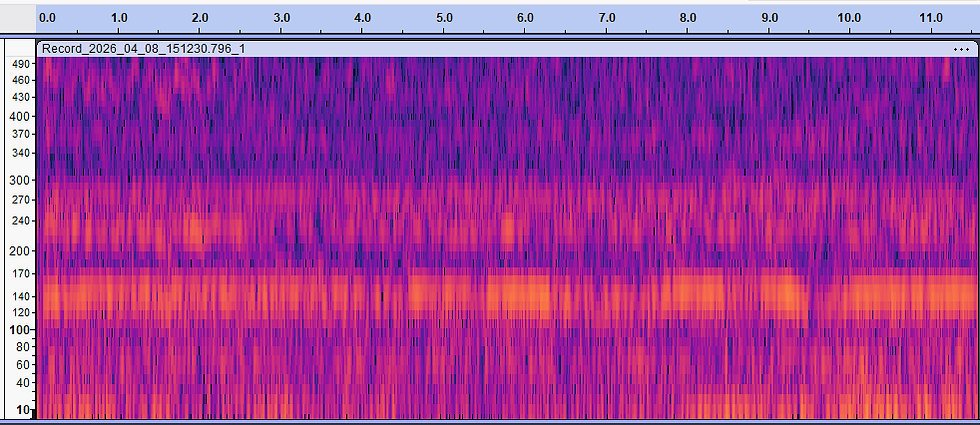
The midband thins first. Brood vibration weakens when varroa reduces metabolic output. In sound, this shows up as a midband that loses density earlier than expected. It becomes lighter, patchy, and uneven. This thinning is one of the earliest reliable indicators that nurse bees are compensating.
Harmonics begin to weaken. As nurse bees increase their workload, coordinated vibration becomes harder to maintain. Harmonics lose clarity, some multiples fade, and the tone begins to feel slightly hollow. This weakening aligns with the physiological strain described in varroa research.
A shallow sag appears. Around 170–200 Hz, a small sag forms in the midband. It’s not dramatic, but it’s consistent. This sag reflects the hive’s effort to maintain structure under load, and it’s a pattern that repeats across early‑fatigue recordings.
The fundamental becomes slightly unstable. The fundamental remains present, but it loses some of its straightness. A small wobble or unevenness appears, not yet the full mid‑stage wobble, but enough to show that the hive is working harder than it should.
Early fatigue is the point where varroa stress becomes clear but still manageable. It’s the moment where rerecording, monitoring natural fall, and watching the midday slice closely can make a difference. This entry is part of the Varroa Stress Detection series, and I’ll continue adding practical examples from real recordings as the series grows.


Comments